WORLD HEALTH DAY: Salesian Missions highlights health and social programs for people living in poverty
Salesian missionaries offer more than 150 medical clinics and hospitals in mostly rural areas
(MissionNewswire) Salesian Missions, the U.S. development arm of the Salesians of Don Bosco, joins humanitarian and other international organizations in honoring World Health Day on April 7. In 1948, the World Health Organization (WHO) held the First World Health Assembly and designated the day to mark the founding of WHO. The first World Health Day was held in 1950. Every year it serves as an opportunity to draw worldwide attention to a particular theme of importance related to global health.
Salesian missionaries offer more than 150 medical clinics and hospitals in mostly rural areas around the globe that serve a wide range of medical care needs. In many countries with Salesian programs, dental care and other necessary health services are provided to youth and their families who might otherwise have no access to health care.
Father Michael Conway, director of Salesian Missions, said, “Salesians care about the health of those we serve. Salesian medical clinics meet a range of health needs from providing preventive health screening to addressing ongoing health issues and ensuring people have the medication they need. This work is especially important in communities where there are few resources and people are at risk. It’s not just clinics though. Nutritional support and water projects also go a long way in helping to prevent disease and health-related issues.”
On World Health Day, Salesian Missions is proud to highlight health and social programs that help to provide healthy outcomes for people living in poverty.
BANGLADESH
The Salesian Sisters of Mary Immaculate operate six clinics in the remote areas of the dioceses of Mymensingh, Sylhet and Chittagong, Bangladesh, to help reduce maternal and infant mortality, according to an article in Global Sisters Report. The sisters have been working to combat these issues for decades in dispensaries, clinics and hospitals.
“We perform an average of three healthy deliveries every month, and we also have an average of at least 10 pregnant women come every month for advice and regular checkups,” said Salesian Sister Baptista Rema in the article. She has spent more than 25 years providing health care to Indigenous communities in rural areas. Most of her patients are poor, lack basic education and must travel long distances to seek her care.
In the article, Sr. Rema noted, “When I graduated from nursing in 1999 and started working at the Mary Immaculate Dispensary in the Diocese of Sylhet, the infant mortality rate in that area was over 10%, but now it is one or two in 1,000.”
Most of the women she provides medical care for are poor and have no choice but to continue working, risking their pregnancies. Others have lost their pregnancies due to abusive husbands. The challenges for these women in rural areas are severe. But still, the Salesian sisters continue to be a source of support.
CENTRAL AFRICAN REPUBLIC
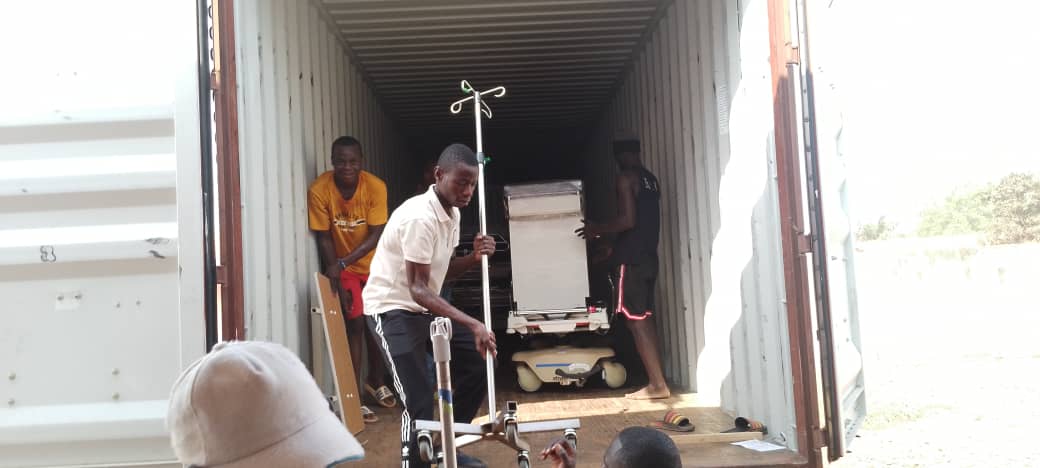
Funding from Salesian Missions helped ship critical medical supplies for a clinic in the Central African Republic.
Salesian missionaries in Bangui, Central African Republic*, had the supplies needed for a medical clinic thanks to a shipment of goods funded in part by Salesian Missions. The shipment was sent by Collaboration Santé Internationale (International Health Collaboration), a Canadian organization focused on responding to the needs of health centers in developing countries.
Funding for the shipment was provided by both Salesian Missions and Don Bosco Foundation Paris. The shipment contained electric hospital beds, neonatal incubators, exam tables, filing cabinets, lab coats, amoxicillin, quinine, first aid supplies and vitamins.
The medical clinic was completed with funding from the French government through Don Bosco Foundation Paris. Don Bosco Foundation Paris requested assistance from Salesian Missions with funding for the shipment and for its extensive experience in shipping humanitarian aid around the globe.
VENEZUELA
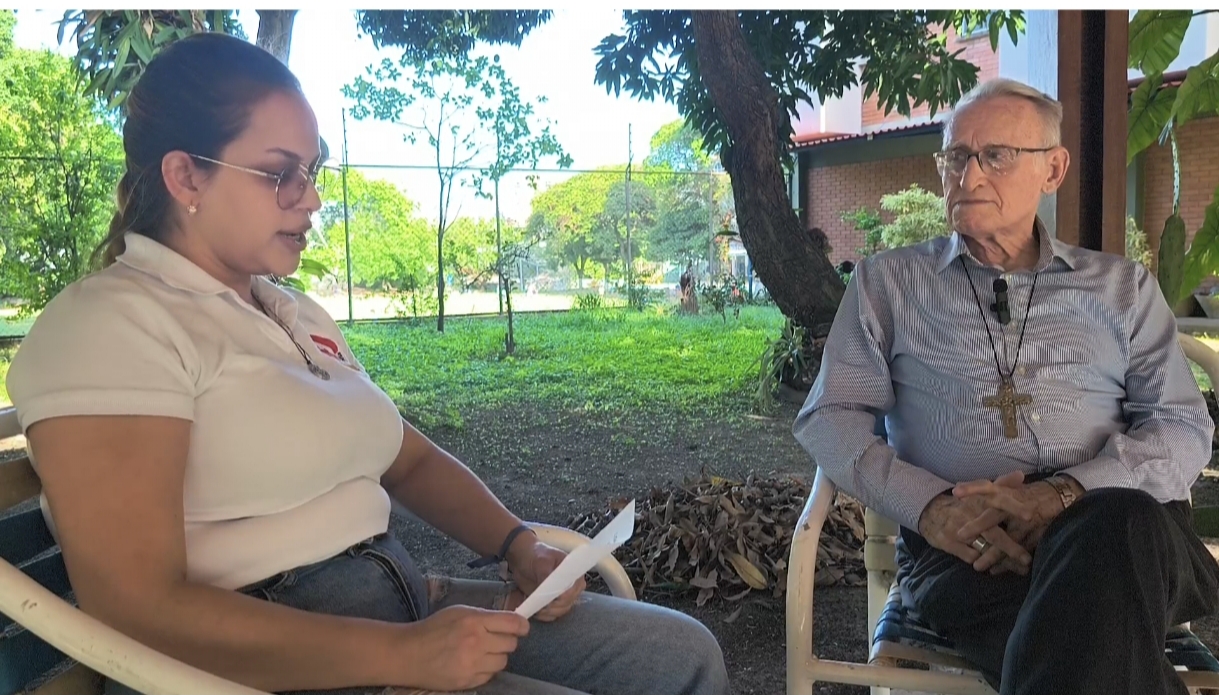
Salesian missionaries in Venezuela have medical insurance coverage thanks in part to donor funding from Salesian Missions.
Salesian missionaries in Venezuela* were able to cover a portion of the Salesian medical insurance thanks to donor funding from Salesian Missions. The insurance coverage includes medical consultations, hospitalizations and necessary procedures for unforeseen health situations for 125 people, including youth in formation, coadjutor Salesians, and Salesian priests.
A Salesian noted, “The support provided allowed us to have secure health services for all Salesians of the San Lucas Province. We were able to have good help which in turn strengthens our pastoral work.”
Salesian missionaries are working in 22 communities throughout the country. Most of these communities are located in areas which have complex social and economic environments. These Salesian communities cannot sustain themselves solely with their own income or with the income from the pastoral care and support services they provide. Funding from donors makes a critical difference in the lives of Salesians and the communities they serve.
ZAMBIA
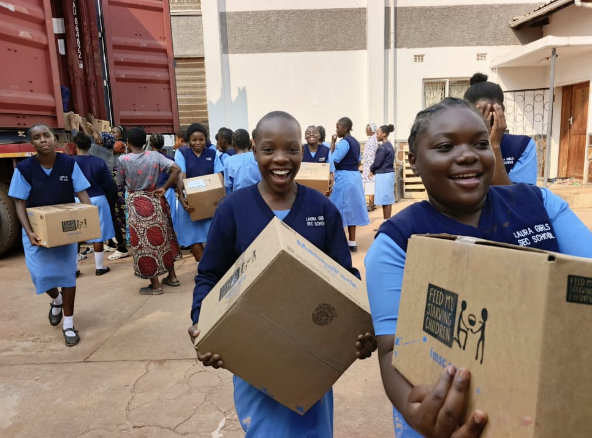
Salesian Missions partnered with Feed My Starving Children to address the nutritional needs of children in Zambia.
Salesian Missions has been able to support nutritional needs of youth in Zambia thanks to an ongoing partnership with Feed My Starving Children, a nonprofit Christian organization committed to “feeding God’s children hungry in body and spirit.” In 2025, five shipments were sent to feed children in Salesian programs.
Meals have already been distributed at Don Bosco Primary and Secondary School, located in Luwingu. The Salesian sisters, who operate the school, noted that more than 5,000 children benefit from food shipments like this.
Salesian sisters with Daughters of Mary Help of Christians have been working in the town of Luwingu since 1984. The town is small and for a long time was isolated from the rest of the country because there were almost no roadways to and from the town. As a result, the population could only rely on subsistence agriculture and hunting as the main sources of food, which was inadequate in terms of both quality and quantity.
At first, the Salesian sisters started a youth center and literacy classes. Later, they opened Don Bosco Primary School that today is one of the best schools in the district. The Salesian nuns also provide vocational education to give the local community opportunities to find employment.
###
Sources:
BANGLADESH: Salesian sisters provide medical support to help reduce maternal and infant mortality
CENTRAL AFRICAN REPUBLIC: Funding from Salesian Missions helps ship critical medical supplies for clinic/Photo courtesy of Salesian Missions (contact for usage permissions)
VENEZUELA: Salesian missionaries have medical insurance coverage thanks in part to donor funding from Salesian Missions/Photo courtesy of Salesian Missions (contact for usage permissions)
ZAMBIA: Salesian Missions partners with Feed My Starving Children to address nutritional needs of children/Photo courtesy of Salesian Missions (contact for usage permissions)
*Any goods, services, or funds provided by Salesian Missions to programs located in this country were administered in compliance with applicable laws and regulations, including sanctions administered by the U.S. Department of Treasury’s Office of Foreign Asset Control.