INDIA: Don Bosco Kuthenkuly establishes eco-infrastructure thanks to donor funding from Salesian Missions
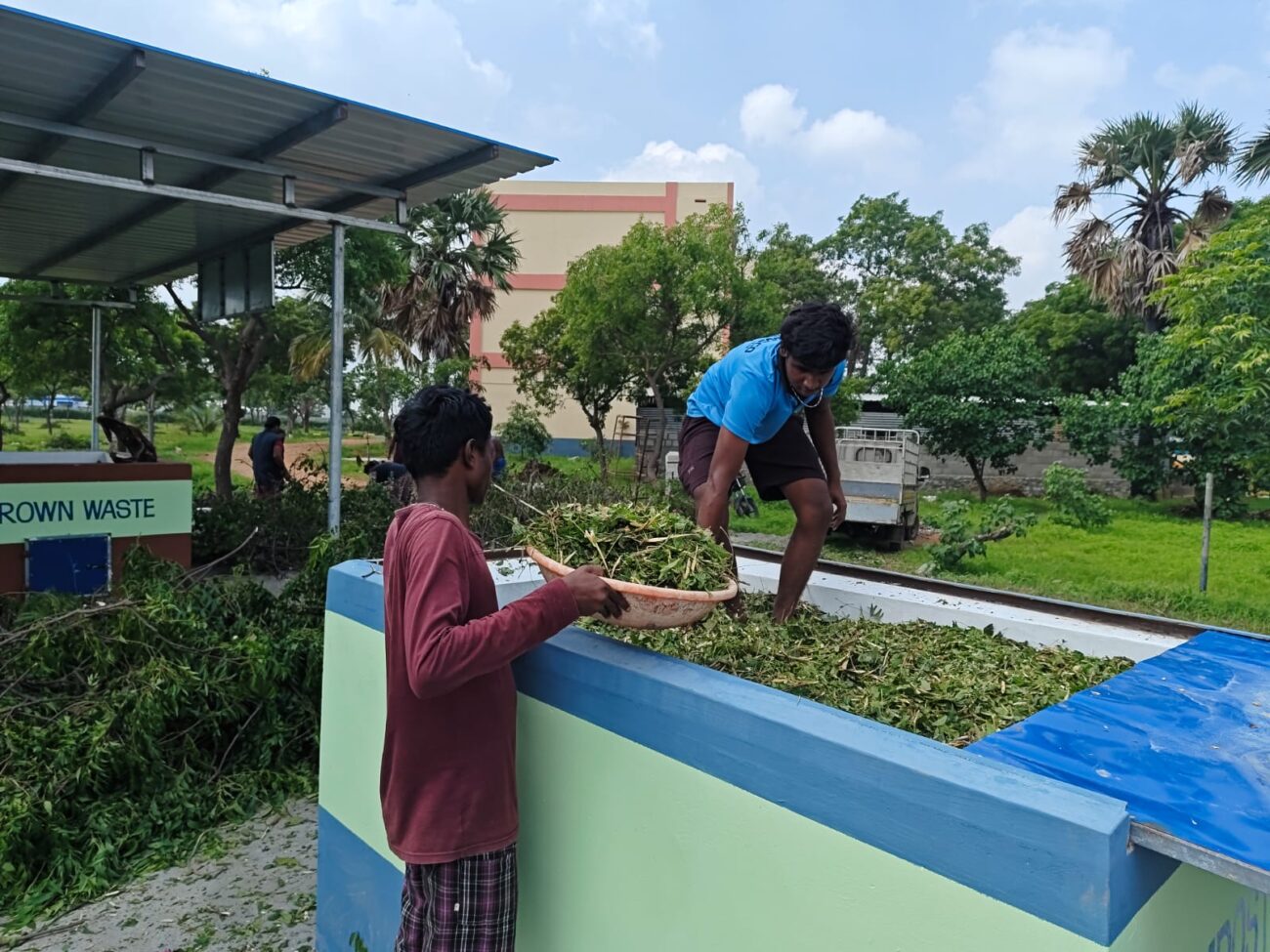
Students benefit from scholarship-through-work program

INDIA
(MissionNewswire) Salesian missionaries established eco‑infrastructure at Pastor Lenssen Polytechnic College, located in Kuthenkuly, Tamil Nadu, India. Don Bosco Kuthenkuly, as the school is known, received the donor funding for the project from Salesian Missions, the U.S. development arm of the Salesians of Don Bosco.
As a result of the project, the campus was transformed into an eco‑friendly environment with extended green cover and improved waste management. The rainwater harvesting capacity was expanded from 500,000 liters (about 132,00 gallons) to 1.1 million liters (about 290,500 gallons), ensuring long‑term water security in a rain‑shadow region. An organic manure manufacturing unit was established, capable of processing 45,000 kilograms (more than 99,000 pounds) of organic waste every two months, thereby reducing environmental impact and enriching soil fertility.
During the project, a large rainwater reservoir was excavated and deepened from three to eight feet, reinforced with concrete side walls, and fenced for safety. A solar pump was installed to ensure reliable water access, while flow pipes and trenches were constructed across multiple blocks to improve water distribution. Six compost pits and a shredder were set up to process organic waste, supported by the purchase of an e‑vehicle for waste collection. In addition, a dedicated website (www.dbgreencare.com) was launched to attract volunteers and scholarship applicants.
The college offers education for students who are poor, with many of them first‑generation learners from vulnerable rural backgrounds, who face financial strain and limited access to higher education. Ninety students are expected to benefit annually through a scholarship‑through‑work program, which reduces dropout risks by allowing them to earn financial aid while gaining practical skills in ecological restoration and entrepreneurship. In addition, local farmers and families are benefiting from organic manure production, improved water security, and eco‑friendly practices.
One student, Ruban Andros, said, “I was involved in real practical work like installing pipes, preparing trenches and assisting with the solar pump installation. This experience helped me gain practical skills and understand how eco-friendly infrastructure works. I also learned about waste management, compost preparation and the importance of conserving water. The project gave me confidence and showed me that young people like us can contribute to protecting our environment and building a better future.”
He added, “Apart from the practical knowledge, my involvement in the composite manure production gave me incentives and a stipend that assisted with my studies. I feel proud that I was able to work in a meaningful project as well support my family by reducing their burdens for my study expenses.”
Looking ahead, Salesians want to plant dense forests, build another reservoir, and make the entire campus fully solar and wind powered. They also want to encourage student-led innovations such as wind-operated water pumps.
###
Sources:
Photo courtesy of Salesian Missions (contact for usage permissions)
Salesian Missions – India
World Bank – India