WEST AFRICA: Salesian missionaries help 19 students with business plans thanks to donor funding from Salesian Missions
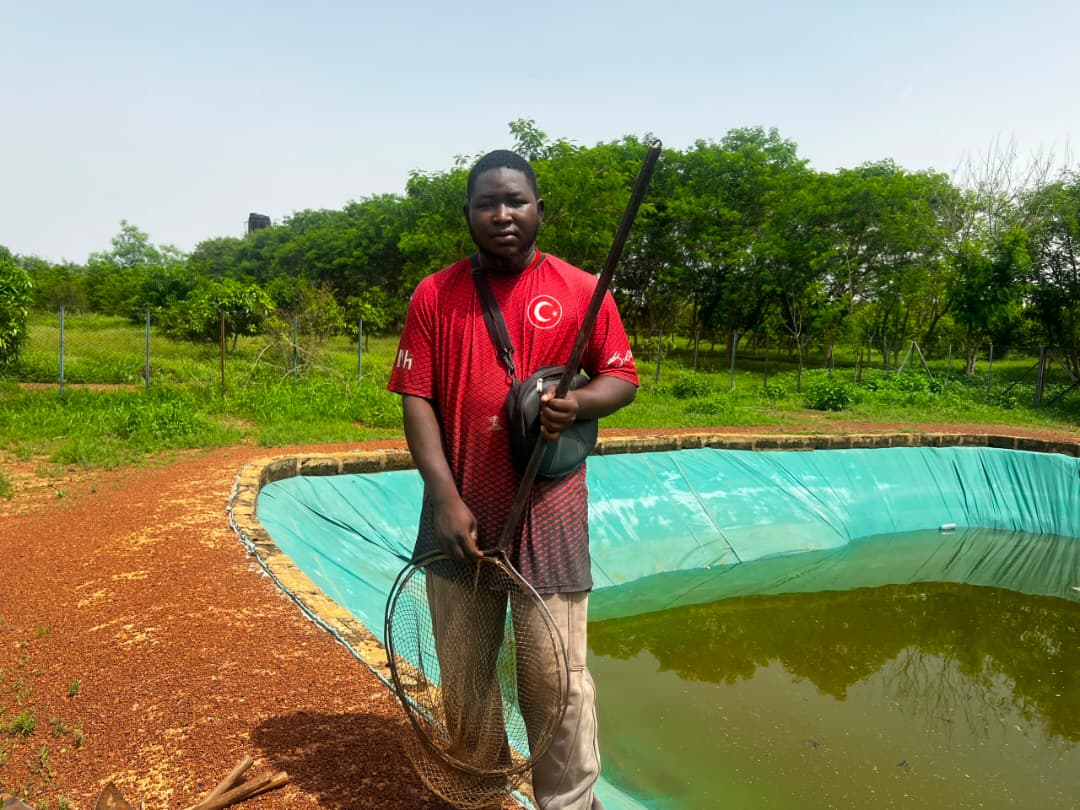
Students receive mentoring as they facilitate businesses
(MissionNewswire) Salesian missionaries in West Africa were able to help students with business plans and business implementation thanks to donor funding from Salesian Missions, the U.S. development arm of the Salesians of Don Bosco. Salesians chose 19 students from Benin, Guinea Conakry, Mali* and Senegal. These students, aged 20-38, have attended Salesian professional training centers and have vocational training in livestock farming, agri-food, electricity and car mechanics.
A Salesian explained, “These students presented their business plans for study and selection. We provided the first part of the funding to help them create these plans and then the second to help those selected implement the activities in their plans. These students are now able to facilitate their small businesses. We are mentoring them in the process.”
One of the students supported is Aïcha Camara, who is developing an agricultural business called Toumou Global Business. Camara said, “I am in the agri-food processing industry. The funding from Salesian Missions has allowed my company to increase production capacity. Funding has also helped with the purchase of equipment and materials. All this contributes to the development of my company and I’m grateful for the support.”
According to the UNESCO Statistical Institute, sub-Saharan Africa has the highest rates of exclusion from education. More than a fifth of children aged about 6-11 are out of school, a third of children aged about 12-14 and nearly 60% of young people aged about 15-17. The region faces a growing demand for education due to its steadily increasing school-age population. Girls face greater exclusion from school than boys of the same age.
###
Sources:
Photo courtesy of Salesian Missions (contact for usage permissions)
UNESCO Institute for Statistics
*Any goods, services, or funds provided by Salesian Missions to programs located in this country were administered in compliance with applicable laws and regulations, including sanctions administered by the U.S. Department of Treasury’s Office of Foreign Asset Control.